

The state killed a man on behalf of the people. Almost none of the people came.
Some messy thoughts after attending Texas' 600th execution.


Texas sun is hot. Like, really hot. It’s not unknown for me to joke that even the weather in Texas is oppressive. Whether or not this is funny depends entirely where on the political spectrum you land and not at all on whether I can tell a good joke.
A couple of weeks ago, I was standing in the scorching sun outside a prison in Huntsville as the State of Texas killed Edward Busby.
Busby’s execution had been stayed by the Fifth Circuit because of unresolved questions about his intellectual disability. The Supreme Court lifted that stay around half an hour before the execution was scheduled to begin.
Busby waited in the holding cell for more than an additional hour while the Texas Board of Pardons and Paroles released its denial of clemency. In “normal” circumstances, the Board of Pardons and Paroles releases their decision a couple of days before a scheduled execution. From the parking lot, the delay felt less like deliberation than avoidance. No one wanted to own the decision until there was no longer any way around it. The result was about what anybody connected with the death penalty in Texas has come to expect.
Nearly two years ago, I stood inside the Huntsville Unit with Ramiro Gonzales. This time, I was in the parking lot, close enough to recognize the choreography, far enough away to feel useless.
Showing up was all I could do.
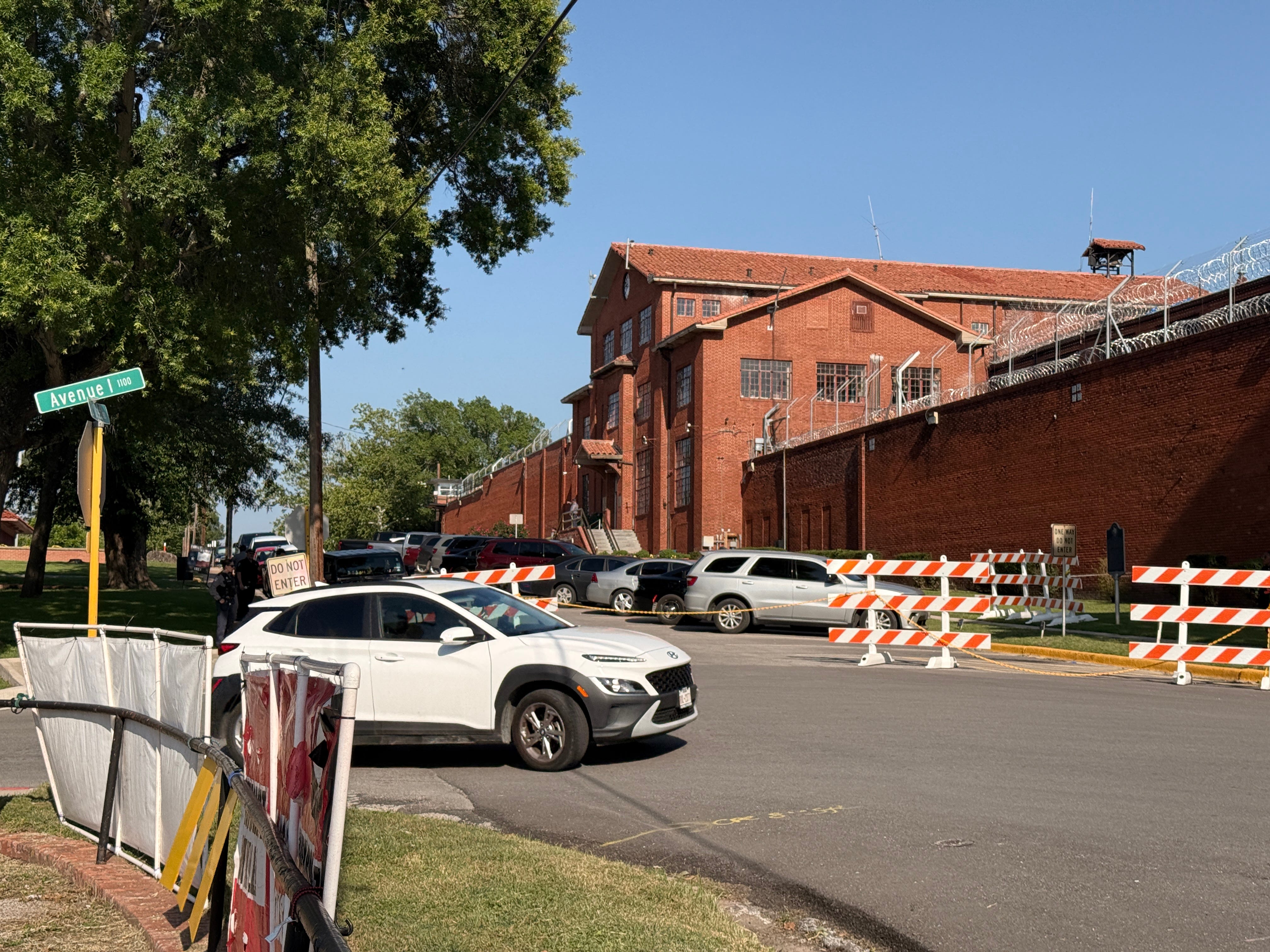
It was impossible not to imagine what was going inside. “The Walls” is a massive, red brick building, smack in the middle of Huntsville’s downtown. There are six more prisons in the surrounding countryside. Every piece of Huntsville’s history, its culture, its economy, and its architecture centers around the prison system.
The Huntsville Unit also holds the Death House, where every single Texas execution has been carried out since 1923.
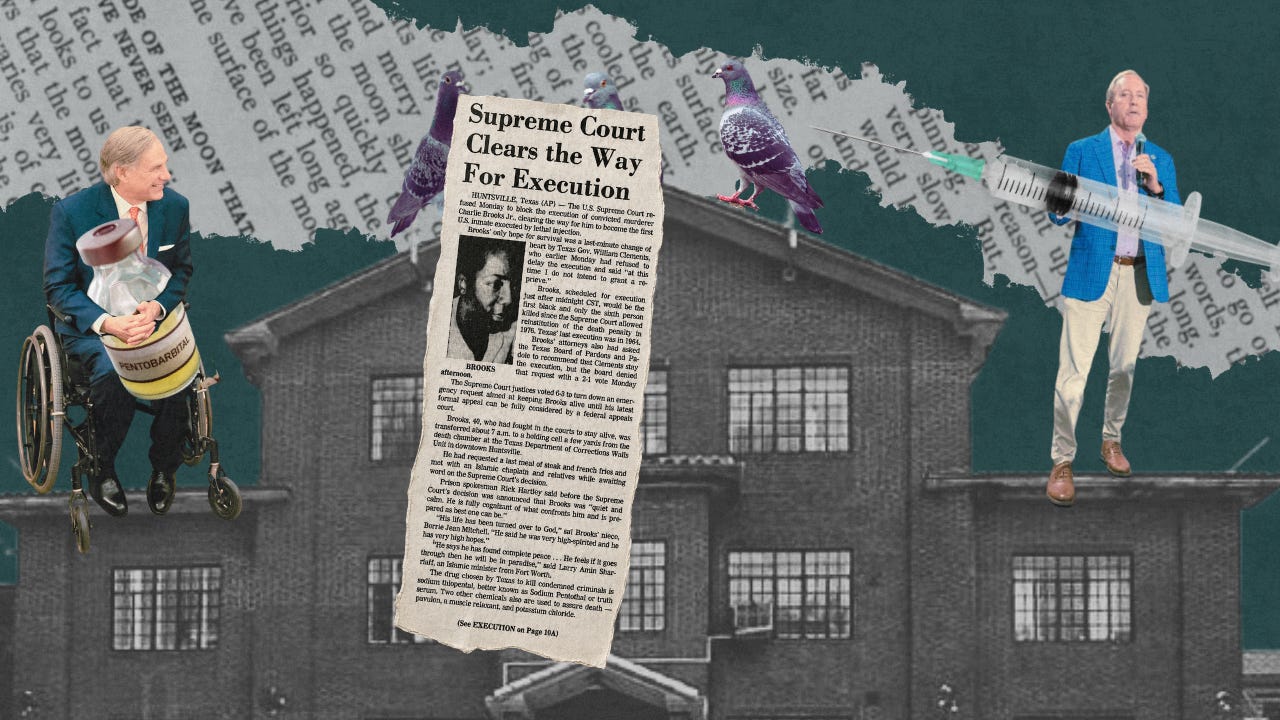
The execution of Edward Busby held historical significance. His lethal injection was the 600th execution Texas has carried out in the Modern Era of the Death Penalty.1 On December 7th, 1982, Charlie Brooks was put to death with a deadly cocktail of three separate drugs meant to render him unconscious, paralyze his diaphragm, and stop his heart, respectively. It was the first lethal injection ever carried out in the United States. Since then, Texas has done it 599 more times.2
I’m not exactly sure what I was expecting to find in the two parking spots reserved for demonstrators outside the prison. Television crews with cameras covering this sad occasion? Crowds chanting their disapproval of Texas killing people in their name?
Instead, I found myself squinting in the sun amidst about a dozen committed hearts. Half of them are a small contingent who show up with an ancient battery-powered sound system to every execution. Two were from the Texas Coalition to Abolish the Death Penalty. A few were from Death Penalty Action, a national abolitionist advocacy group. And me. That was it. The officers assigned to keep watch outnumbered us.
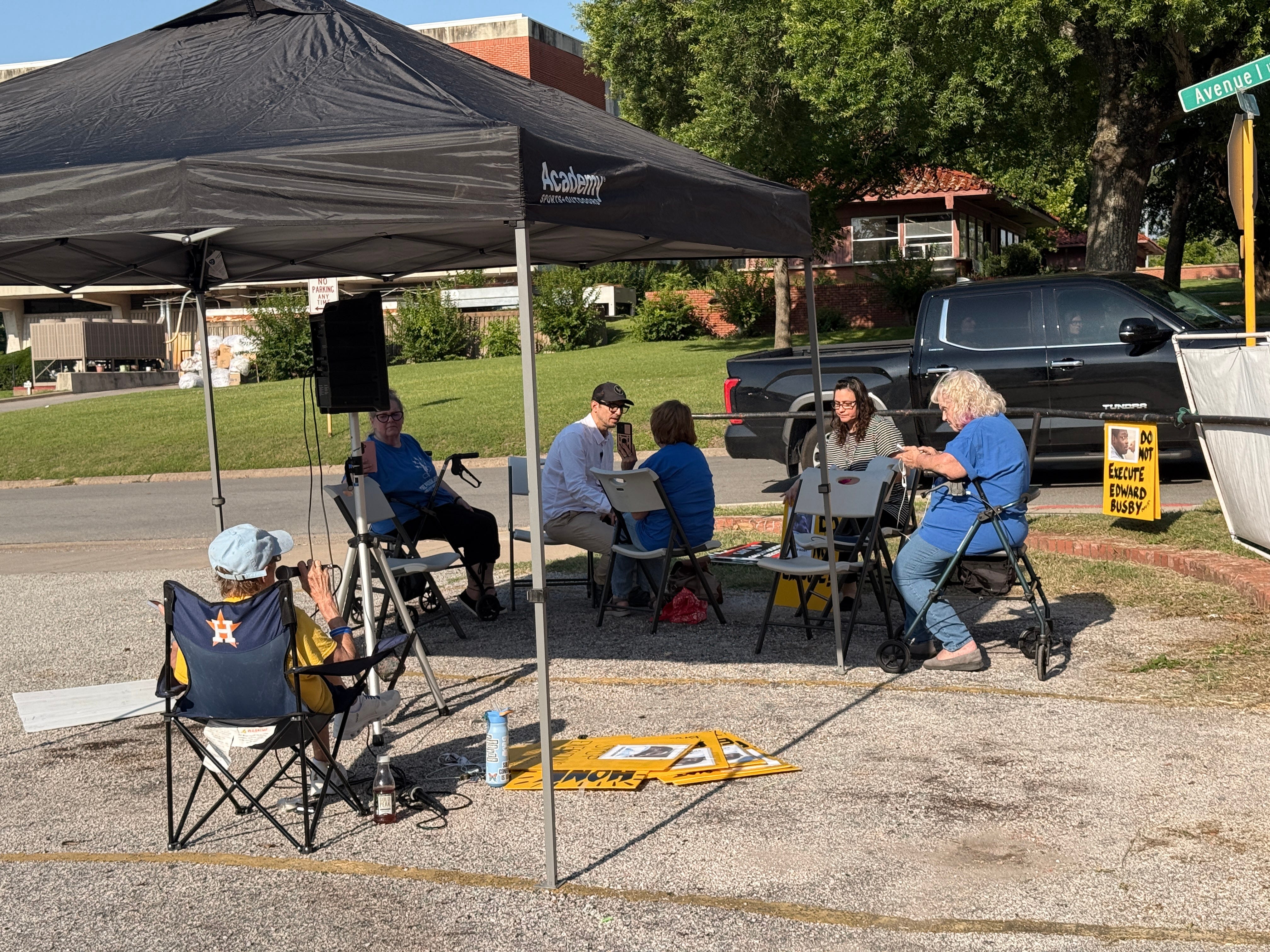
Other than the Facebook livestream hosted by volunteers from The Prison Show, and the Zoom vigil hosted by DPA, there were no cameras. The only other media I encountered were two young university students on placement with the local paper. They were kind. They were attentive. But I did not get the sense they had any idea, before they arrived, that they were covering Texas’s 600th execution.3
There was a time when executions brought out many, many more people in protest. Dozens of signs bearing the words, “Not in My Name” would be waving in the air.
But in the Year of our Lord 2026, this particular affront to justice has just become so normalized. Part of the expected ritual of a sunny May evening in a small, tired town. A town where you either work for the carceral system, are studying to be part of the carceral system, or find yourself surviving within the carceral system.
Executions have a liturgy. I don’t mean that metaphorically. Liturgy, in its oldest sense, is the work of the people. It is a public ritual performed on behalf of the community. Texas executions are precisely that. The body chosen to be broken changes. The gurney does not. The straps are fastened. The witnesses are positioned. The final words are solicited. The chemicals are pushed. Every movement rehearsed. Every role assigned.
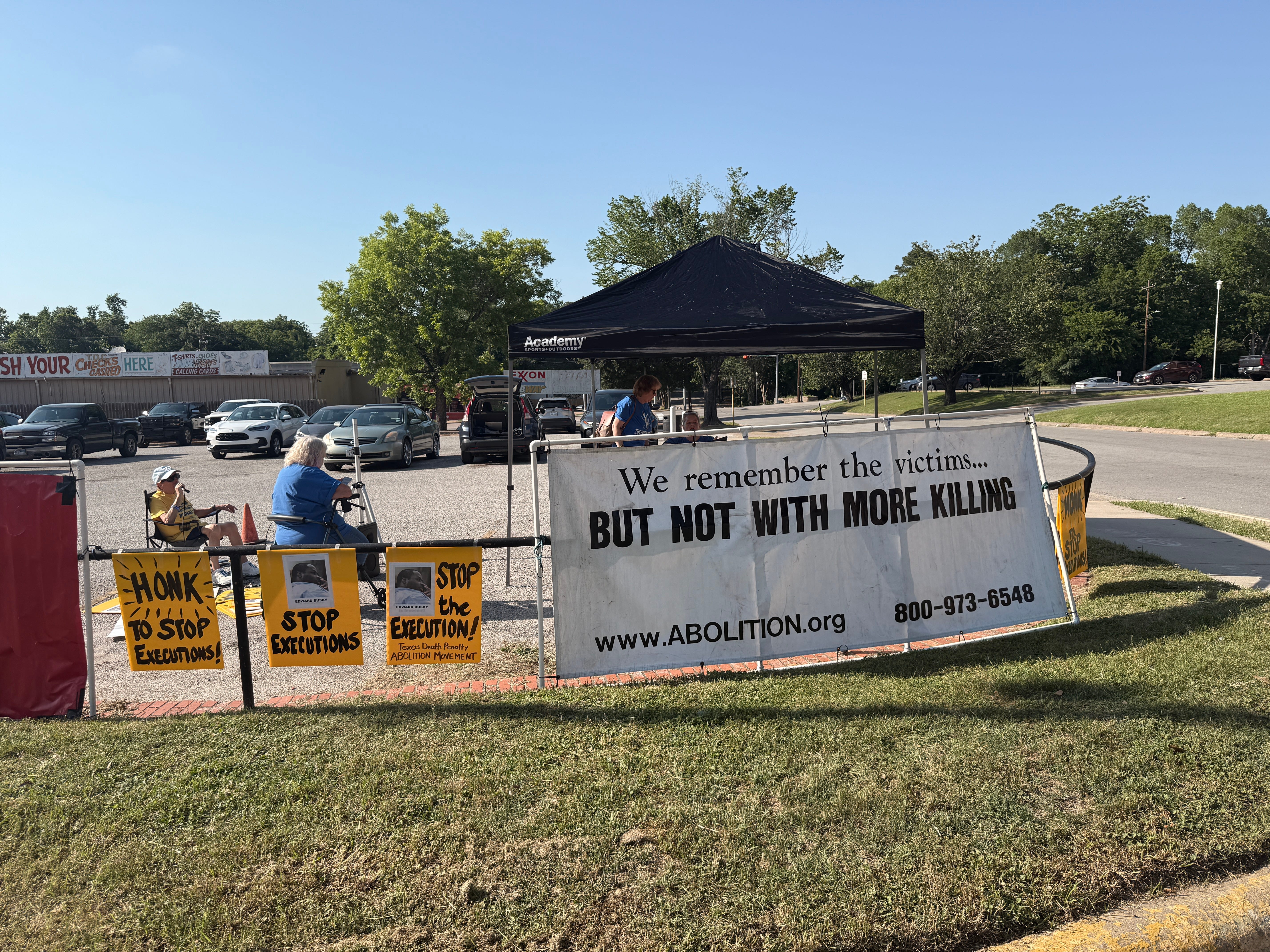
In his Texas Monthly piece from 2013, Maurice Chammah described essentially the same scene outside “The Walls” Unit. That was execution number 506. Nearly a hundred more people have been put to death in the intervening thirteen years, and the crowds outside have gotten smaller, not larger.
So what’s going on?
Part of it, I think, is exhaustion. The abolitionists who continue to show up—and they are remarkable people—have been doing so for decades. The movement hasn’t won, and there is a grief that settles when you keep bearing witness to something that doesn’t stop. Protest, at its core, is an act of hope. Someone will see this, and something will change. There is more to it, of course. A sense of community. A place to have your own outrage mirrored back to you. It’s so hard to keep going when you are being gaslit by the world. Communal protest can be part of staying grounded.
But hope is important. And after 600 executions, and watching both state and federal governments clearly invested in keeping them going, that hope is hard to sustain.
More on Broadview
From the archives: Sister Helen Prejean on the fight to abolish the death penalty
Ramiro Gonzales faces execution. His friendship with a Canadian minister has changed them both.
Of course, there is additional work happening behind the scenes. The day-to-day legal maneuvering on behalf of clients who have so much on the line. The attorneys who litigate these cases over and over again are the heroes in the fight towards abolition. I would even suggest it’s the lawyers we don’t regularly hear about who are doing some of the most profound work.
But I think something else is happening too. The cases that generate outrage—the ones that bring journalists, cameras, and crowds—tend to be the cases with a compelling innocence claim.4 The cases where someone can say, with varying degrees of volume and confidence, that the system got it wrong.
Except, the system is working exactly the way it’s intended to. It’s not that the system gets it wrong. The system itself is wrong.
But I also understand. The cases involving potential innocence feel like something worth arguing about. Something that might actually be won.
Edward Busby’s case didn’t have that. It shouldn’t have needed to have that. But what it did have was a man whose intellectual disability had been documented by doctors on both sides of the legal aisle, a man whose execution the Supreme Court had theoretically prohibited in Atkins v. Virginia back in 2002, and a state that has spent two decades since finding creative ways to work around that prohibition. The injustice was real. It was just harder to make into a clean headline.
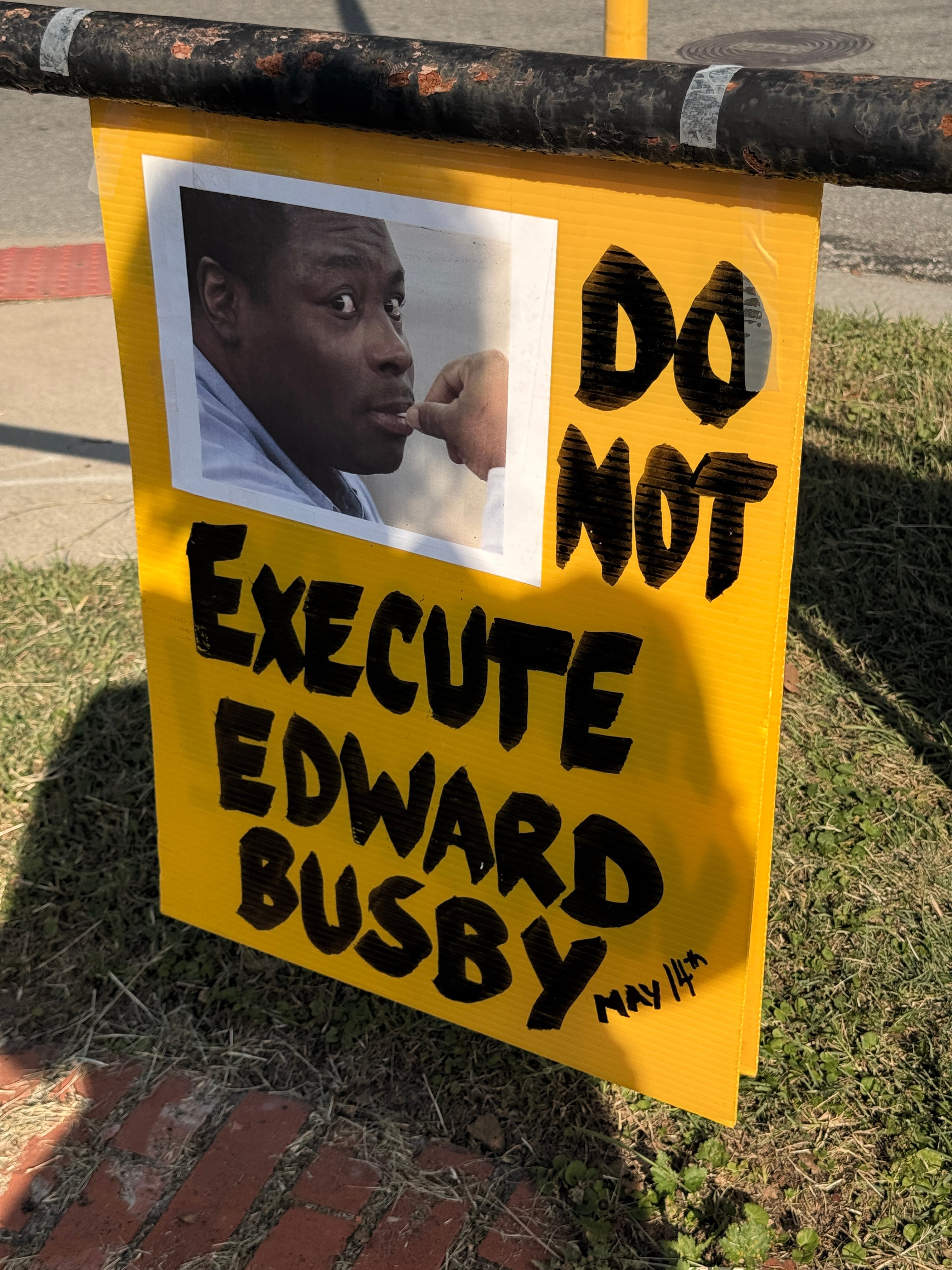
And yet, even without all of that, the fact simply remains that the state should not be in the business of killing people. It’s not an effective deterrent. It doesn’t make communities safer. It keeps victims’ families in limbo for years (often decades) with the promise that closure will happen, but only after another homicide.

As the sun sank a little lower in the sky, I looked around at our small group. The sound system was packed up. Signs were being placed back into cars. Edward Busby was dead. The 600th person to die while lying cruciform in that death chamber.
I thought about the liturgy that unfolded behind those red brick walls. The work of the people. Carried out that evening, before almost none of them.
There should have been more people there.
There, or wherever one goes when they need to shout, Not in my name. 🐦
Wilderness Times is co-created with Broadview, an award-winning Canadian publication known for thoughtful journalism that attends to spirituality, justice and the questions that tug at our collective conscience.
Broadview is a registered charity and has made this Substack freely available because we believe that thoughtful, justice-seeking journalism should be accessible to everyone. Creating this space — and keeping it free — takes time, skill and resources. If this space nourishes you, please make a tax-deductible donation.
Your support empowers Broadview to tell more courageous stories and helps build a more just and compassionate world.

If this story resonated with you, you might appreciate more like it — and more often.
Broadview’s Best of the Week newsletter delivers a curated selection of award-winning journalism on current events shaped by faith, straight to your inbox every Friday.
join me in the comments…
What are some Canadian examples of dangerous liturgies that are carried out in our name?
Is public witness still meaningful when it does not seem to change outcome?

“The Modern Era of the Death Penalty” generally refers to the period following the landmark 1976 U.S. Supreme Court decision in Gregg v. Georgia, which allowed capital punishment to resume after a brief moratorium.
With the increasing restrictions placed around the drugs used within lethal injections, Texas switched to using a single drug, Pentobarbital, in 2012.
Just an aside: There are five media witnesses allowed in the witness rooms during a Texas execution. One spot is held by the Associated Press. Another is held by the Huntsville Item. The other three spots need to have some kind of local interest in witnessing. No out of state press. Certainly no foreign press. Because of these restrictions, it is rare that all five media witness spots are taken. It also means that reports on Texas executions follow a very clear formula. The media could play a greater role in helping the public understand the liturgy being carried out on their behalf. Instead, reports of executions indicate an extremely professional, sanitized, medicalized procedure.
It feels worth noting that Ramiro’s execution was an exception to this statement. Ramiro’s attorneys launched an extremely robust clemency campaign, which gained significant media attention. Two foreign film crews covered Ramiro’s execution, but this turned out to be more because of scheduling than anything uniquely connected to Ramiro’s case. There were more demonstrators for Ramiro than I encountered on May 14th.
How many States in USA still condone the Death Penalty?